

Product Introduction
Sorbitan laurate, also known as sorbitan monolaurate, is a non-ionic surfactant commonly used in the cosmetic and personal care industries. It is derived from sorbitol, a sugar alcohol, and lauric acid, a saturated fatty acid typically sourced from vegetable oils like coconut or palm kernel oil [1]. This esterification process results in a molecule with both hydrophilic (water-loving) and lipophilic (oil-loving) properties, making it an effective emulsifier, dispersing agent, and stabilizer in various formulations [2]. Due to its mildness and low toxicity, sorbitan laurate is used in a wide array of products, including creams, lotions, cleansers, and makeup [3].
Production Process
The production of sorbitan laurate typically involves the esterification of sorbitol with lauric acid; this reaction is generally carried out at elevated temperatures with the presence of a catalyst. The catalyst, often an acid or base, facilitates the reaction between the hydroxyl groups of sorbitol and the carboxyl group of lauric acid, forming an ester linkage and releasing water as a byproduct [4]. After the esterification is complete, the reaction mixture undergoes purification processes to remove unreacted starting materials, catalysts, and any unwanted byproducts. These purification steps may involve distillation, filtration, or solvent extraction to obtain a high-purity sorbitan laurate product. Finally, the purified sorbitan laurate is analyzed to ensure it meets the required quality standards before being packaged for use in cosmetic and other applications [5].
Efficacy and Function
Sorbitan laurate functions primarily as an emulsifier, helping to blend oil and water-based ingredients together in cosmetic formulations [6]. Its amphiphilic nature reduces the surface tension between the two phases, allowing them to mix and remain stable over time, preventing separation. Beyond emulsification, sorbitan laurate can also act as a dispersing agent, helping to evenly distribute pigments and other solid particles throughout a formulation [7]. This is particularly useful in makeup products like foundations and lotions. Additionally, it can contribute to the texture and feel of a product, providing a smooth, non-greasy feel on the skin [8].
Application Scenarios
Sorbitan laurate finds extensive use in a variety of cosmetic and personal care products; it is commonly found in creams and lotions, where it helps to create stable emulsions, improving the consistency and application of the product. In cleansers and makeup removers, sorbitan laurate aids in the removal of oil and dirt from the skin. Due to its mildness, it’s often included in baby products, such as lotions and shampoos [9]. It is also applicable in sunscreens, foundations, and mascaras to ensure uniform coverage and stability of the formulation [10].
Packaging and Transportation
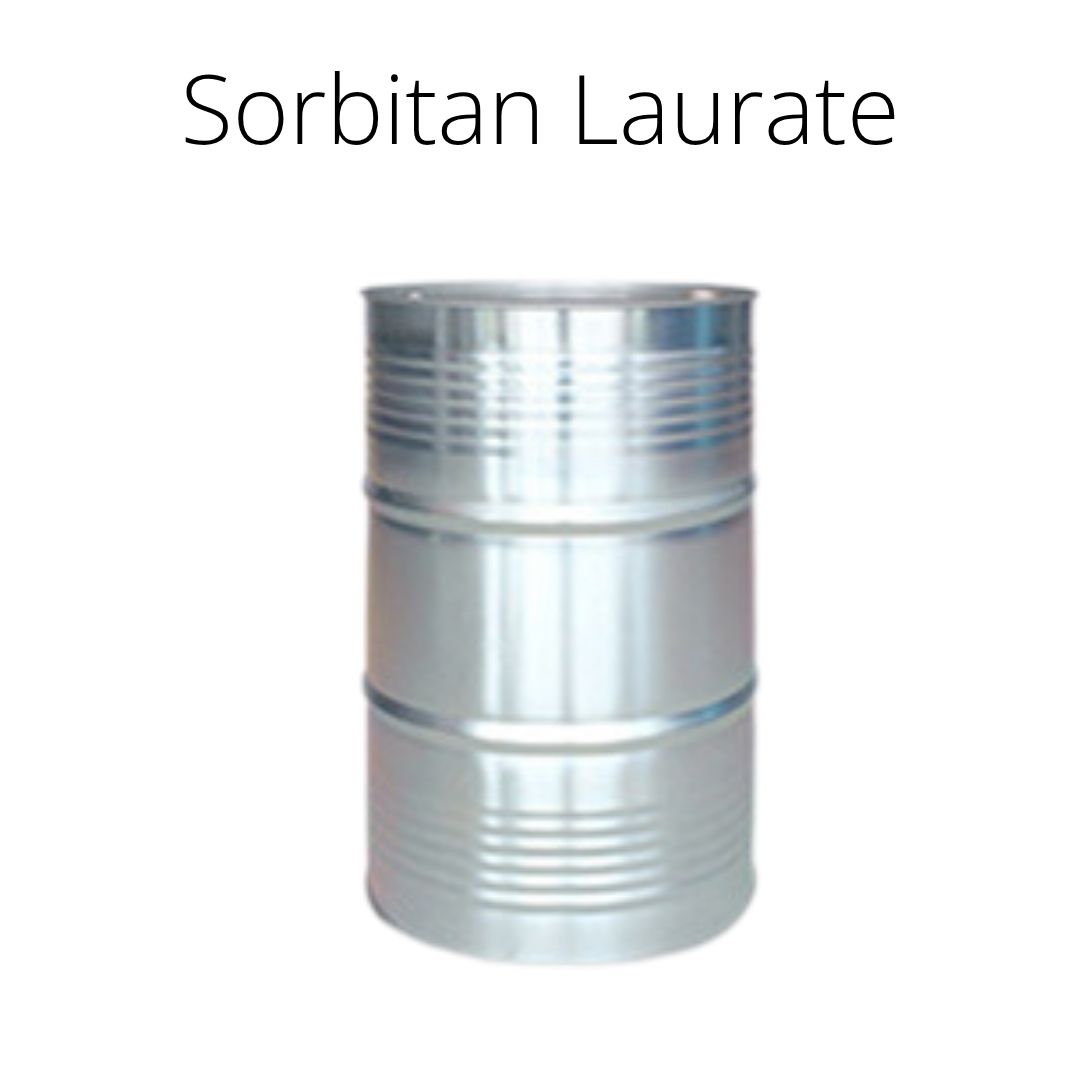
Sorbitan laurate is typically packaged in drums, IBC (Intermediate Bulk Container) totes, or smaller containers depending on the quantity and customer requirements. These containers are usually made of materials like plastic or steel, which are compatible with the chemical properties of the surfactant and prevent contamination. During transportation, sorbitan laurate should be stored in a cool, dry place, away from direct sunlight and extreme temperatures to maintain its quality and stability [11]. Proper labeling and documentation, in accordance with transportation regulations, are necessary to ensure safe handling and delivery.
Citations
[1] ChemicalBook. "Sorbitan Laurate." https://www.chemicalbook.com/ProductChemicalPropertiesCB4278682_EN.htm
[2] SpecialChem. "Sorbitan Laurate." https://cosmetics.specialchem.com/inci/sorbitan-laurate
[3] MakingCosmetics Inc. "Sorbitan Laurate." https://www.makingcosmetics.com/Sorbitan-Laurate_p_107.html
[4] ScienceDirect. "Esterification." https://www.sciencedirect.com/topics/chemistry/esterification
[5] Lipochemicals. "Ester Purification." https://www.lipochemicals.com/processes/ester-purification/
[6] European Commission. "Emulsifiers." https://single-market-economy.ec.europa.eu/sectors/food/food-processing/food-improvement-agents/emulsifiers_en
[7] ResearchGate. "The role of dispersing agents." https://www.researchgate.net/publication/344006344_The_role_of_dispersing_agents_on_the_structural_characteristics_of_nanofluids_A_review
[8] INCI Decoder. "Sorbitan Laurate." https://incidecoder.com/ingredients/sorbitan-laurate
[9] EWG Skin Deep. "Sorbitan Laurate." https://www.ewg.org/skindeep/ingredients/706174/SORBITAN_LAURATE/
[10] UL Prospector. "Sorbitan Laurate." https://www.ulprospector.com/en/na/PersonalCare/Detail/1125/54182/Sorbitan-Laurate
[11] CAMEO Chemicals. "Sorbitan, monolaurate." https://cameochemicals.noaa.gov/chemical/15698

I adore working with cosmetic ingredients! From emulsifiers to plant-based materials, I help make sure you get the highest quality products. Let’s work together to bring your cosmetic line to life with great, eco-friendly ingredients. 💄🌸