

Product Introduction
1,3-Butanediol, also known as 1,3-butylene glycol, is a small organic molecule commonly used in the cosmetic industry, because of its multi-functional properties. It is a clear, colorless, and viscous liquid that is soluble in water and many organic solvents, contributing to its versatility in formulations [1]. Synthetically produced, 1,3-butanediol functions as a solvent, humectant, and viscosity-controlling agent, important for product texture and stability [2].
Production Process
The production of 1,3-butanediol typically involves chemical synthesis, with several routes available, influencing the final product's purity and environmental impact. One common method involves the aldol condensation of acetaldehyde, followed by hydrogenation of the resulting aldol product, providing a cost-effective approach [3]. Another method involves the hydration of butadiene or crotonaldehyde, requiring specific catalysts and reaction conditions to ensure selectivity and yield [4]. Purification steps, such as distillation, are crucial to remove impurities and ensure the high purity required for cosmetic applications [3].
Efficacy and Function
1,3-Butanediol demonstrates several beneficial properties in cosmetic formulations, contributing to the performance and sensory attributes of the product. As a humectant, it attracts moisture from the air and helps retain it in the skin, enhancing skin hydration [5]. It also acts as a solvent, aiding in the dissolution and dispersion of other ingredients, facilitating uniform distribution in the formulation [6]. Additionally, 1,3-butanediol can modify the viscosity of formulations, improving their texture and application properties, which is essential for creams and lotions [5]. Its antimicrobial properties can also contribute to the preservation of cosmetic products, which is an added benefit [7].
Application Scenarios
1,3-Butanediol is used in a wide array of cosmetic and personal care products, due to its versatile properties and compatibility with various ingredients. It is commonly found in skin care products like moisturizers, serums, and cleansers, where its humectant properties help maintain skin hydration [5]. In hair care products, such as conditioners and styling aids, it can act as a solvent and viscosity modifier, improving product texture and application [6]. Decorative cosmetics, including foundations, concealers, and lipsticks, also utilize 1,3-butanediol, for its solvent and texture-enhancing capabilities, which are important to product performance [7].
Packaging and Transportation
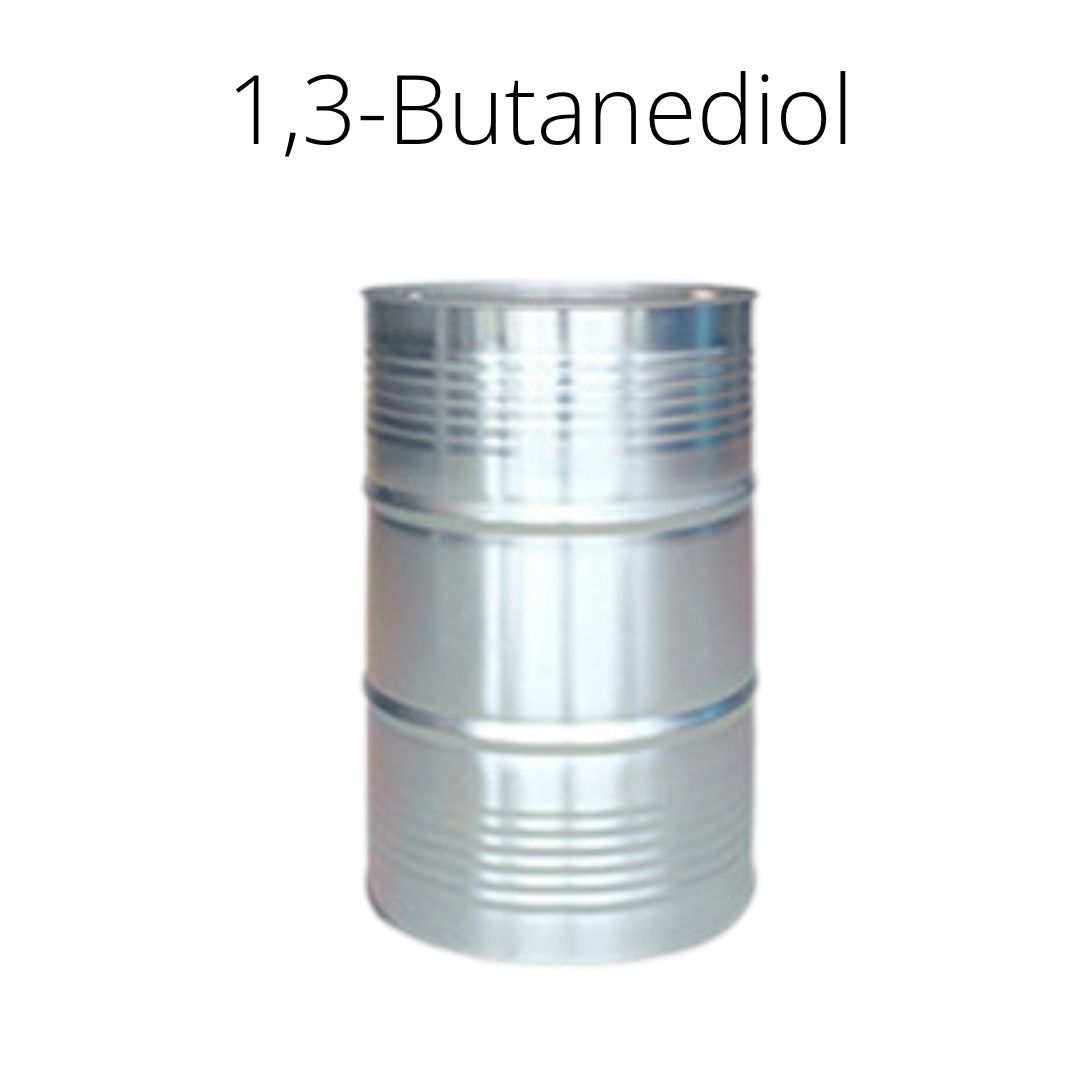
1,3-Butanediol is typically packaged in airtight containers, such as drums or IBCs (Intermediate Bulk Containers), to prevent contamination and maintain its quality during storage [8]. Transportation should adhere to standard regulations for chemical substances, including proper labeling and handling procedures, to ensure safety, because this material is not usually considered hazardous [9]. Storage should occur in a cool, dry, and well-ventilated area, away from direct sunlight and incompatible materials, to prevent degradation [8]. Compliance with local and international regulations is essential, especially when transporting 1,3-butanediol across different regions [9].
Citations
[1] Johnson, W., Bergfeld, W. F., Belsito, D. V., Hill, R. A., Klaassen, C. D., Liebler, D. C., … & Marks, J. G. (2012). Safety assessment of butylene glycol, hexylene glycol, dipropylene glycol, and related glycol ethers as used in cosmetics. International journal of toxicology, 31(5_suppl), 225S-248S.
[2] Löffler, M., Meier, C., & Stäb, F. (2021). Glycols. In Handbook of Detergents, Part F: Formulations (pp. 1-23). CRC press.
[3] Ullmann's Encyclopedia of Industrial Chemistry. (n.d.). Butanediols, Butenediol, and Butynediol. Wiley-VCH Verlag GmbH & Co. KGaA.
[4] Kirk-Othmer Encyclopedia of Chemical Technology. (n.d.). Butanediols. John Wiley & Sons, Inc.
[5] Lodén, M., & Wessman, W. (2001). The influence of a cream containing 20% urea and 5% lactic acid on dry, eczematous skin. Acta Dermato-Venereologica, 81(5), 346-349.
[6] Draelos, Z. D. (2000). Cosmetics in dermatology. Cosmetics in dermatology.
[7] Gessner, M., Schepky, A., & Wendel, E. (2022). Cosmetics: From chemistry to regulatory framework. Walter de Gruyter GmbH & Co KG.
[8] European Chemicals Agency. (n.d.). 1, 3-Butanediol. Retrieved from [ECHA website, if available]
[9] United Nations. (n.d.). Globally Harmonized System of Classification and Labelling of Chemicals (GHS). United Nations Publications.

I adore working with cosmetic ingredients! From emulsifiers to plant-based materials, I help make sure you get the highest quality products. Let’s work together to bring your cosmetic line to life with great, eco-friendly ingredients. 💄🌸